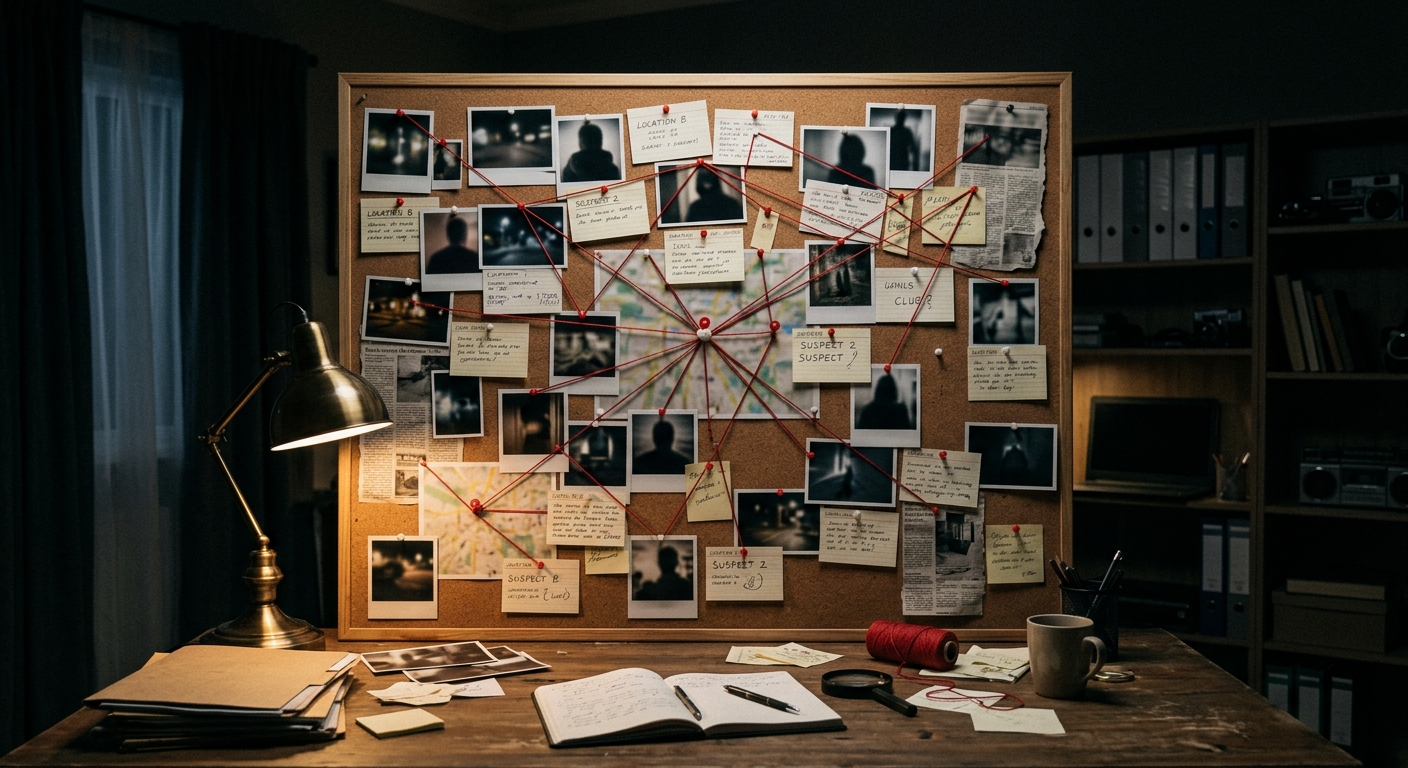
Why True Crime Podcasts Are the One Genre a Summary Can Actually Ruin
Every genre in this series so far has had its own reason a summary falls short: reality TV loses the vibe, comedy loses the delivery, news loses the context. True crime is a different kind of case entirely. Summarize it wrong, and you’re not just missing something, you’re actively ruining the thing that made it worth listening to in the first place.
Why This Genre Is Structurally Different
Most content categories lose value when compressed. True crime can lose its entire point, because the format is built almost entirely around suspense and reveal. A documentary’s value survives knowing the ending in advance. A true crime episode’s value is frequently built on you not knowing it, with the reveal engineered as the payoff for everything that came before it.
What a Careless Summary Actually Does Here
A summary optimized for efficiency naturally gravitates toward the most information-dense parts of a piece of content, which in true crime usually means the resolution: who did it, how it was solved, what happened at trial. That’s exactly the information a listener may not want handed to them upfront, because receiving it early doesn’t just change the experience, it can eliminate the reason to experience the rest of it at all.
This is the one genre in this series where a “complete and accurate” summary can be a worse outcome than an incomplete one, because completeness here often means spoiling.
Why This Isn’t True of Most Other Content
A sports recap spoiling the score is a minor issue, plenty of people want the score first and the story after. A true crime spoiler is a different category of problem, because unlike a score, the reveal is usually the entire narrative architecture the episode was built around. Removing the mystery doesn’t just remove one data point. It removes the structure that made everything before it meaningful.
What Actually Helps
Treat true crime summaries as a discovery tool, not a replacement. A summary here is genuinely useful for deciding whether a case or a series is worth your time, based on the setup, the general shape of the investigation, the tone. It’s a poor substitute for the actual listen if the answer is yes.
Default to withholding the resolution unless explicitly asked for it. A summary that describes the setup, the key figures, and the general arc without giving away the ending respects what the genre is actually selling. This is close to the opposite instinct a summary usually has, which is to front-load the most decisive information.
Recognize that “spoiler-free” is a real, specific constraint here, not a nice-to-have. For most content, a spoiler is a minor inconvenience. For true crime, spoiling the reveal is closer to erasing the reason the content exists in the first place, and that’s a meaningfully higher bar than most categories require.
The Bottom Line
Every genre in this series has taught a different lesson about what a summary can and can’t preserve. True crime’s lesson is the sharpest one: sometimes the most responsible thing a summary can do isn’t to compress information efficiently, it’s to know what to deliberately leave out.