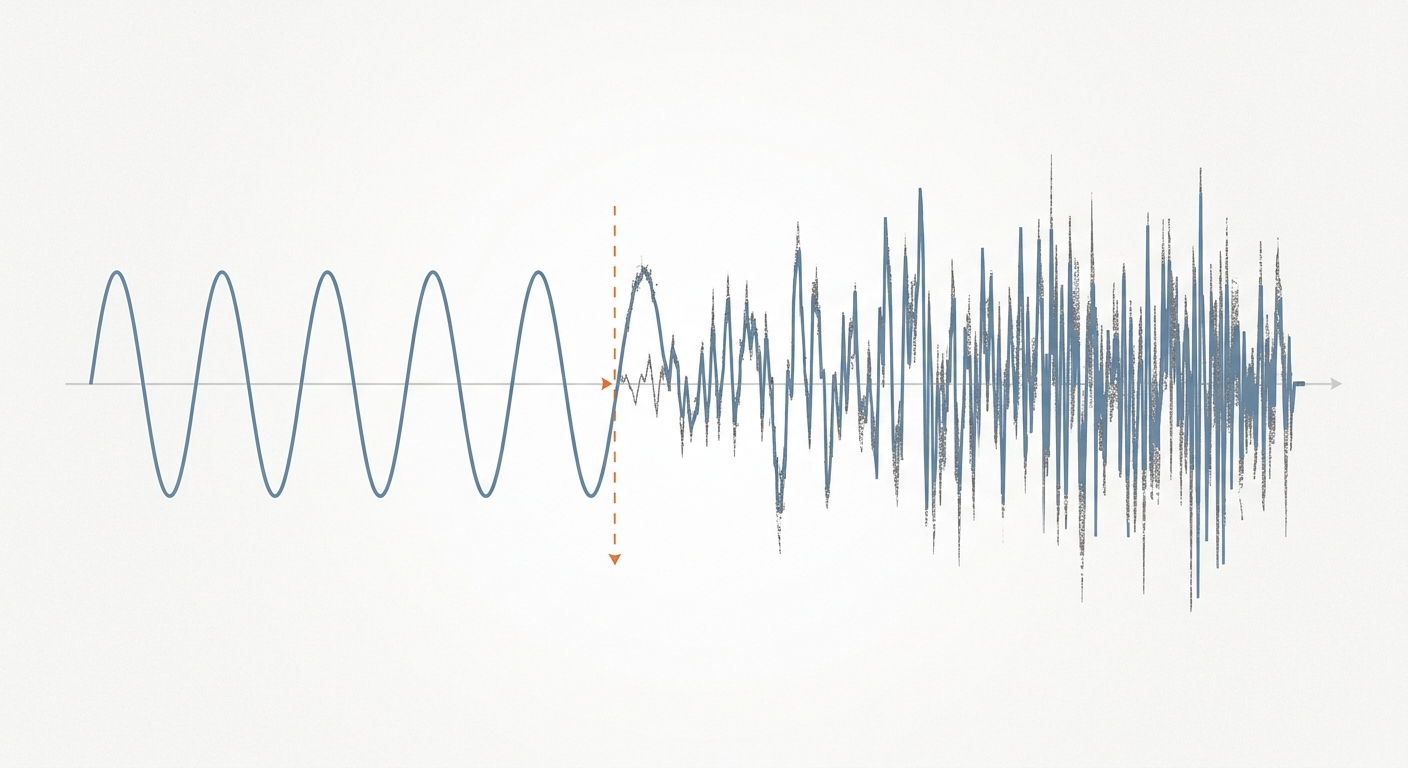
What Happens With Bad Audio: A Technical Limitation Worth Understanding
Every AI summary starts the same way, whether the source is a tutorial, a news segment, or a two-hour interview: audio gets converted to a transcript, and the transcript gets condensed into a summary. That first step is the one people almost never think about, and it’s also the one place where a source video’s actual technical quality can quietly determine how good the summary you get back actually is. Here’s what happens when the audio isn’t clean, and why it matters more than most people assume.
Why the Transcript Is the Real Bottleneck
The summary is only as good as the transcript underneath it, and the transcript is only as good as what the audio actually allowed to be captured. This is a strict dependency chain — no amount of downstream summarization sophistication fixes a transcript that got a word wrong, missed a phrase, or misattributed who said what. Garbage in the transcript step doesn’t get filtered out later. It propagates.
What Actually Degrades a Transcript
Overlapping speech. Two people talking over each other, common in unscripted interviews and panel discussions, is one of the hardest things for any transcription system to handle cleanly. The result is often a transcript that either merges both speakers into a garbled mess or drops one of them entirely for that stretch — and a summary built on that gap will confidently miss whatever was said during it.
Background noise and poor mic setups. A video recorded on a phone mic in a noisy room, or a call recorded with inconsistent audio levels between speakers, produces a transcript with real gaps and misheard words — not obvious errors that jump out, but small ones that quietly shift meaning. A misheard number, a dropped negation (“not” missing from a sentence entirely), a name transcribed wrong — these are the errors that are actually dangerous, because they don’t look like errors.
Heavy accents or non-standard speech patterns underrepresented in training data. Transcription accuracy isn’t uniform across every voice and speaking style, and content from creators whose speech patterns are less represented in the data these systems learned from is more likely to produce a lower-quality transcript, through no fault of the content itself.
Music or sound effects overlapping dialogue. Content that layers dialogue over background music or sound design — common in more produced videos — creates the same core problem as background noise: real information gets lost in the gap between what was said and what got captured.
What This Actually Means for the Summary You Get
A summary built on a degraded transcript doesn’t usually fail obviously. It doesn’t come back empty or throw an error. It comes back fluent and confident, because the summarization step doesn’t know the transcript underneath it had gaps — it just works with what it received. The failure mode is quiet: a summary that reads completely reasonable while missing or misrepresenting a piece of what was actually said, with no visible signal that anything went wrong.
This is exactly why a summary shouldn’t be treated as infallible, especially for content where audio quality is a known risk — an unscripted interview, a recording from an unpredictable environment, anything with overlapping speakers or heavy background noise. The confidence of the output doesn’t track the reliability of the input.
What Actually Helps
We can’t fix the source audio — that’s determined the moment the content is recorded, long before it reaches us. What we can do, and what’s actually worth knowing as a user, is factor source quality into how much you trust a given summary. A clean, single-speaker, well-produced video is close to the ideal case, and the summary is correspondingly close to fully reliable. A rough recording of an overlapping group conversation is the case where a summary is a genuinely useful first pass, not a substitute for actually watching the parts that matter.
The Bottom Line
Summarization has a real dependency most people never think about: it’s downstream of a transcript, and the transcript is downstream of the actual audio. Bad audio doesn’t produce an obviously bad summary — it produces a confident one that’s quietly less reliable than it looks. Knowing which kind of source you’re dealing with is part of using a summary well.