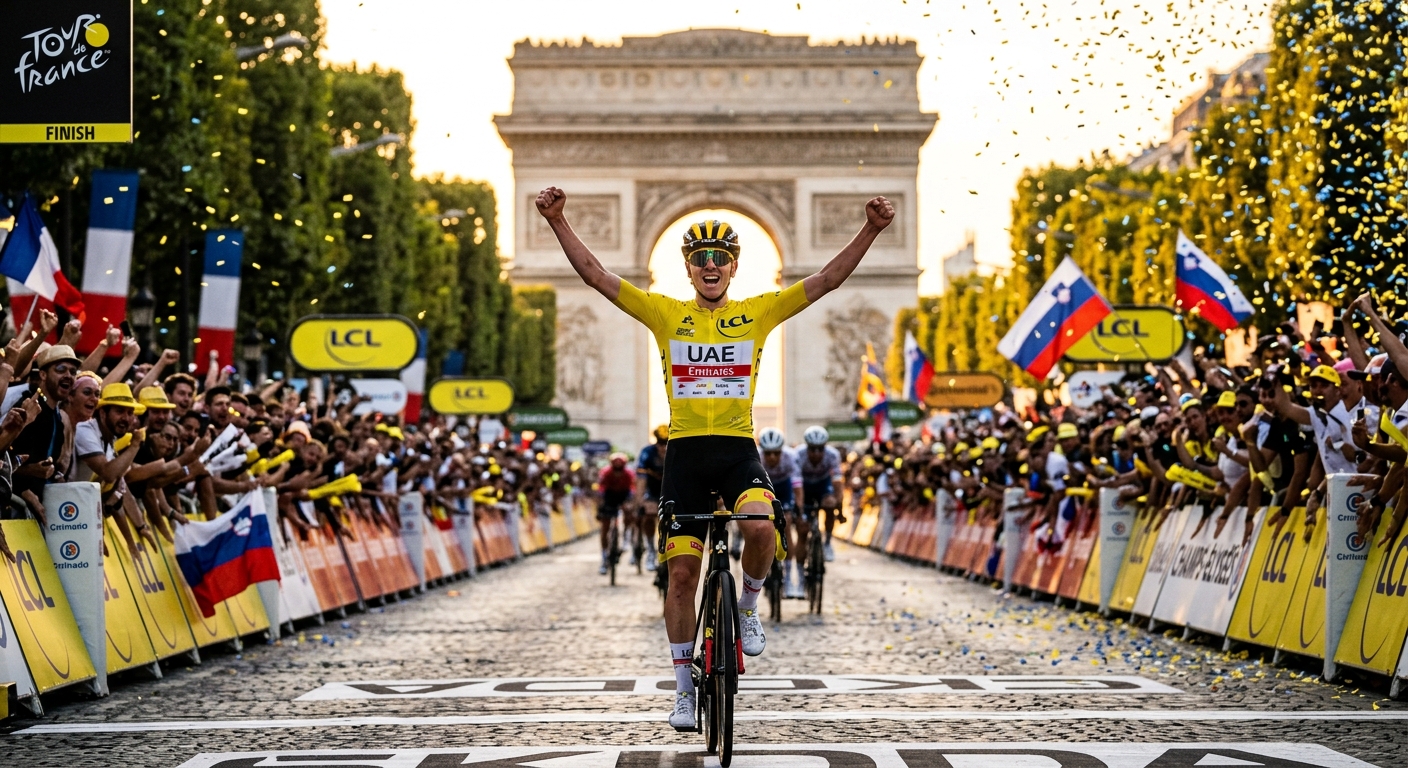
The Tour de France Finishes in Paris Soon. Here's How the Race Actually Got Decided.
Three weeks of racing, and the outcome that mattered most was decided in a stretch that lasted a handful of stages. If you followed the Tour loosely — checking in for headlines rather than watching every stage — here’s the compressed version of how this year’s race actually got decided.
The Setup: Weeks 1 and 2 Didn’t Decide Much
The flat stages in week one were sprinter territory, as always — real drama, but not GC drama. The early mountain stages in the Pyrenees opened the first real gaps between the GC contenders, but the field stayed competitive. Nobody had built a decisive lead. The race was still genuinely open heading into the final week.
That’s the normal shape of a Tour. The early mountains test who’s in form. They rarely settle the race outright.
The Alps: Where It Actually Got Decided
The Alpine stages in the final week were where the gaps that determined the winner actually opened. Multiple long climbing stages back to back, with less recovery time between them than the Pyrenees stretch, meant that three weeks of accumulated fatigue became the deciding factor rather than raw climbing ability alone.
The specific pattern that decided this year’s race: one contender made a decisive attack on a mid-Alps summit finish that the rest of the field couldn’t match, gaining enough time to build a real cushion. From that point, the strategy shifted — the leader rode defensively, protected by a strong team, while the chasers had to attack repeatedly and take on risk to try to close the gap. Most of those attacks were neutralized. The gap that opened in the Alps held, with only minor adjustments, through the rest of the mountain stages.
The Time Trial (If There Was One)
If this year’s route included a late individual time trial, that stage either confirmed the GC order established in the Alps or, in years where the gap is close, provided the actual final decision. Time trial specialists can make up significant time on a pure power effort, which is why the gap heading into a final TT matters more than the gap at any other point in the race — a two-minute cushion can evaporate against a strong time trialist, while the same gap is safe against a weaker one.
What Made the Difference
Looking back at the full three weeks, the outcome tracked to three factors: who avoided a bad day in the mountains (crashes, mechanical issues, or simply an off day all end GC hopes instantly), who had the strongest team support in the decisive stages (isolated leaders lose time even when they’re individually strong), and who peaked at the right moment — some riders are stronger in week one and fade, others build into the race and are strongest exactly when the Alps hit.
The Bottom Line
If you only remember one thing about how this Tour got decided: it wasn’t a single dramatic moment, even though the coverage will highlight one. It was the accumulation of a stronger team, better fatigue management, and one decisive attack in the Alps that the field couldn’t answer. That’s the story of most Tours, even the ones that get remembered for a single iconic moment.