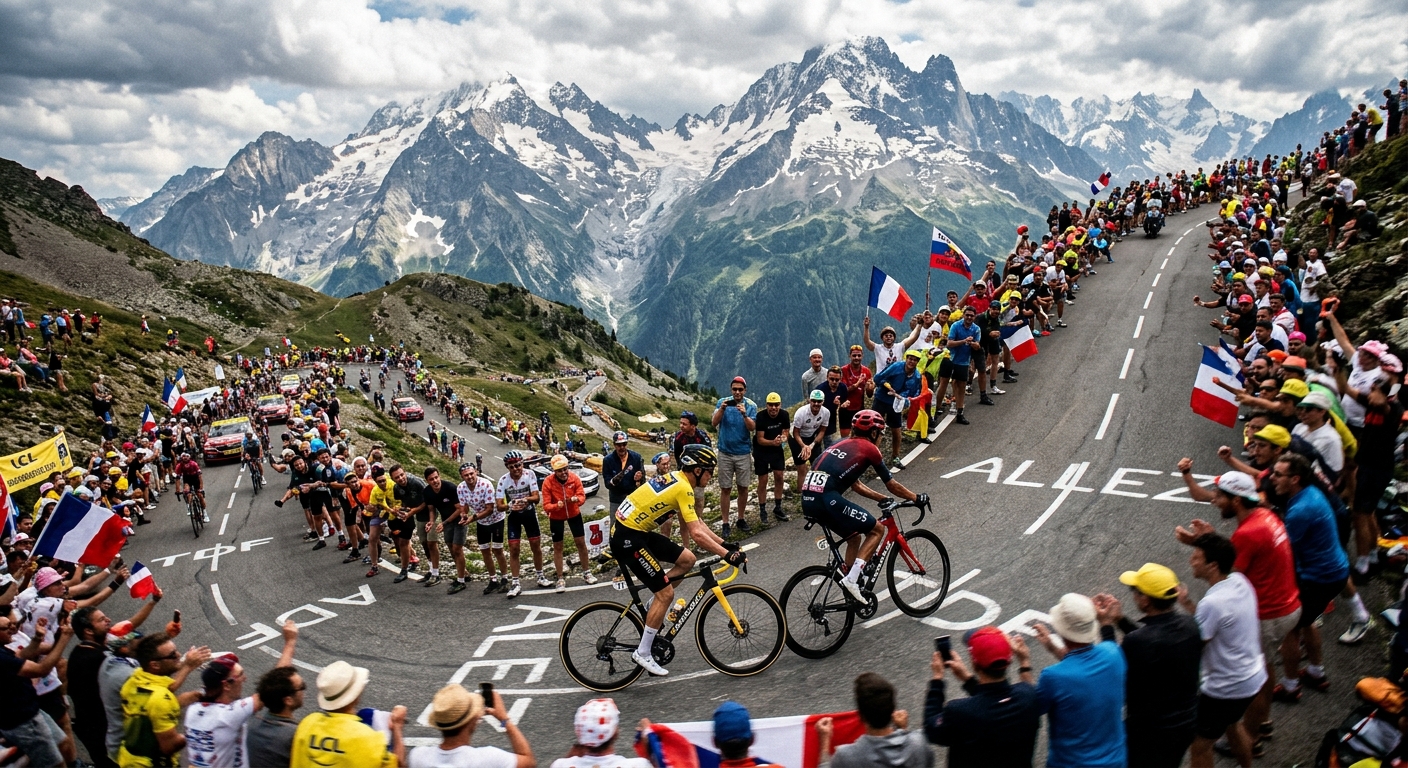
The Tour de France Is in the Alps Now. Here's Why This Week Actually Decides the Race.
The Tour survived the Pyrenees. GC gaps opened, a few contenders lost real time, but the race is still competitive at the top. Now the Tour moves to the Alps, and this is the stretch that usually decides who wins.
Here’s why this week matters more than the mountains that came before it.
Why the Alps Hit Different Than the Pyrenees
Every Tour with both mountain ranges follows a similar shape: the Pyrenees test who’s actually fit and who’s fighting off-form, and the Alps decide who wins. The Alpine stages tend to be longer, higher, and more relentless — multiple categorized climbs back to back rather than a single decisive summit finish, which means there’s nowhere to hide for a full stage. Riders who survived the Pyrenees on discipline and team support run out of road to hide behind in the Alps.
The other factor: by this point in the Tour, three weeks of accumulated fatigue is real. The rider who’s strongest on paper in week one isn’t always the rider who’s strongest in week three. The Alps are where that fatigue gap becomes visible — attacks that would have been matched in week one start actually sticking in week three, because the field’s ability to respond has narrowed.
What to Watch For
Whether the top contenders are still attacking or just defending. Early in a Tour, GC riders attack to gain time. By the Alps, a rider who’s shifted from attacking to purely defending their position is telling you something about their form, even if the commentary doesn’t say it directly. Watch the body language and the willingness to attack, not just the final time gap.
The mountain domestiques running out. Team support matters enormously in the Alps because the stages are longer and harder. Watch for when a team’s strongest support riders get dropped — that’s usually the signal that the leader is about to be isolated and vulnerable to an attack from a rival team that still has support.
Time trial implications. If there’s a time trial remaining after the Alps, the GC gaps coming out of this week matter differently than if the Alps are the last real GC battleground. Check the remaining route — a rider who loses a moderate amount of time in the Alps can still win if they’re a strong time trialist with a TT still to come. A rider who loses time with no TT left is in real trouble.
Catching Up in 10 Minutes
If you dropped off after the Pyrenees explainer, here’s the fast version: check the current GC top 5 and the time gaps between them. Anything under a minute between two riders is genuinely uncertain heading into the Alps. Anything over 3-4 minutes usually means the race for that position is functionally decided barring disaster.
Then watch the highlight package from the biggest Alpine stage — usually the one with the most categorized climbs or the summit finish at the highest altitude. That single stage highlight tells you more about the state of the race than any other single piece of content available.
The Bottom Line
The Tour’s outcome is usually clear by the time the peloton leaves the Alps, even with a final time trial still to come. This week is the one worth actually watching if you’re only going to watch one week of the Tour. The GC battle that’s been building since the first mountain stage either resolves here or narrows to a genuine photo finish heading into the final week.