The Tour de France Starts Saturday. Here's How to Follow 21 Stages Without Quitting Your Job.
The Tour de France starts Saturday. Twenty-one stages across 23 days — with two rest days — ending in mid-July in Paris. It’s one of the biggest sporting events of the summer and one of the easiest to completely lose track of because the coverage volume is genuinely impossible to keep up with.
Here’s how to follow it without restructuring your life.
Understand the Stage Types First
Not all 21 stages are created equal. The Tour has four types, and your attention should not be distributed equally across them.
Flat stages are where the sprinters compete and the GC (general classification) riders coast through in the peloton. Unless you follow specific sprinters, flat stages are skip-worthy for casual fans. The drama is in the sprint finish, which runs about 15 minutes.
Hilly and medium mountain stages are where breakaways happen — smaller riders attacking and sometimes holding on, leading to interesting results that aren’t determined by the biggest names. Worth a highlights watch, not a live watch.
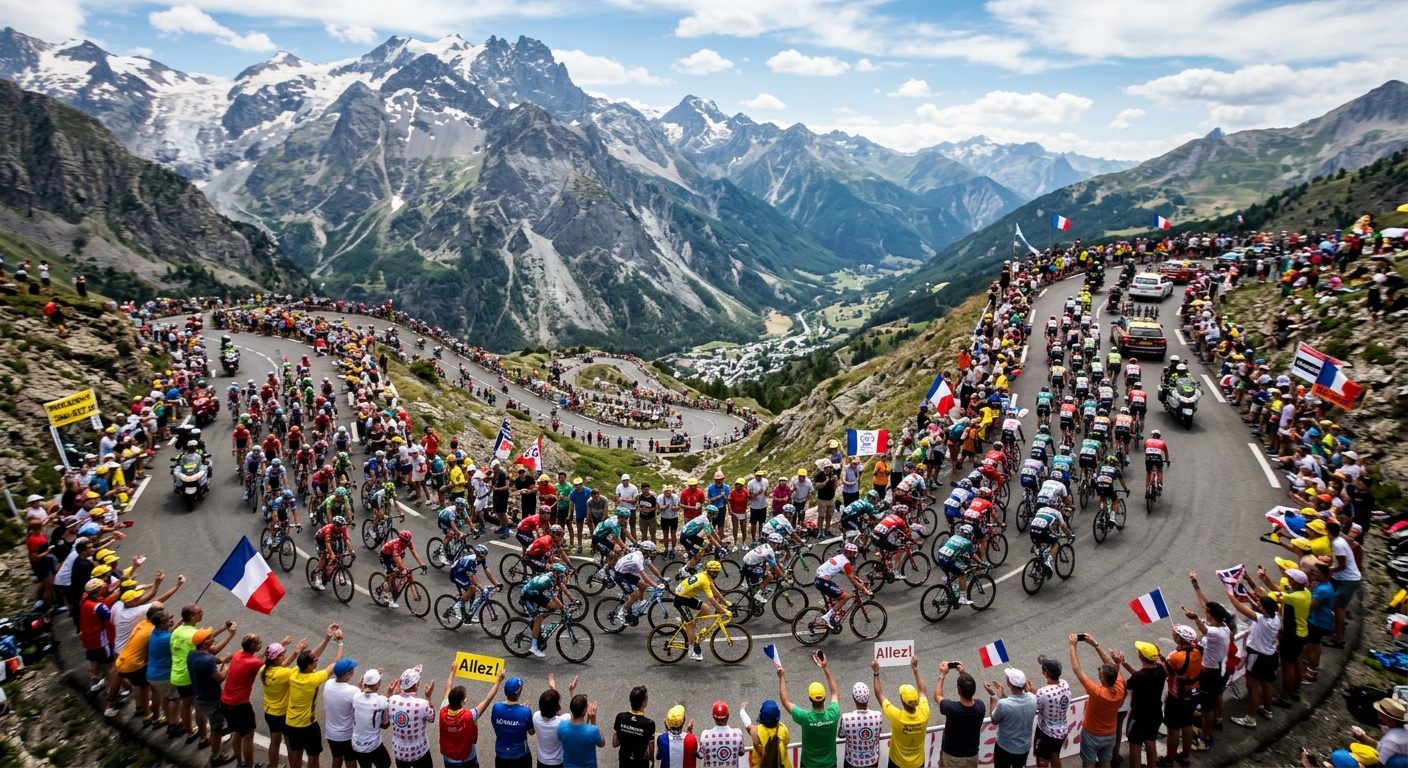
Summit finishes and high mountain stages are where the Tour is decided. These stages end at the top of a major climb — Alpe d’Huez, Col du Tourmalet, Mont Ventoux. The GC riders attack each other, time gaps open up, the race becomes something different. These are the stages you actually want to watch.
Time trials are one-on-one against the clock. Dramatic in a different way — each rider goes alone, and the results can scramble the GC standings. There’s usually one or two in a Tour.
Who to Actually Watch
The 2026 Tour is built around the two-way rivalry between Tadej Pogačar and Jonas Vingegaard — the two best stage racers in the world, and genuinely different rider profiles. Pogačar attacks constantly, making races unpredictable. Vingegaard defends and manages, winning by attrition and time trial strength. Watching them race each other in the mountains is the reason to care about the Tour.
Beyond those two: Remco Evenepoel is a legitimate GC threat and the most interesting young rider in cycling. Primož Roglič at whatever team he’s landed with this year is always a wildcard.
The sprinters (for flat stages if you care): Mark Cavendish retired, so the sprint competition is genuinely open. Check the stage winner each day — the sprinters race a completely different Tour than the GC riders.
The Practical Consumption Plan
Morning check (2 minutes): GC standings after yesterday’s stage. Who gained time, who lost time, what the gap looks like at the top of the classification. This keeps you current without watching anything.
Stage type check: Before each stage, know what type it is. If it’s a flat sprint stage and you don’t follow sprinters: skip the stage, check the result in the morning. If it’s a summit finish: decide if you want to watch the last 30–45 minutes live or catch a 10-minute highlight package.
Weekly mountain stages: There are typically two to three major mountain stages per week in the Alps or Pyrenees. These are the stages that generate the most content and the most consequential results. Plan to engage with these specifically.
Where AI Recaps Fits
The Tour produces more stage recap content than almost any other event — 21 stages, team analysis, GC tracker updates, highlight packages, English and European coverage side by side. AI Recaps surfaces what’s worth watching from each day’s stage so you can queue the 8 minutes of actual cycling that mattered instead of spending 20 minutes deciding where to start.
The mountain stages start in earnest in Week 2. That’s when the Tour gets interesting. You have a week to figure out what you actually care about before it matters.