Reading vs. Watching vs. Skipping: The Decision Framework
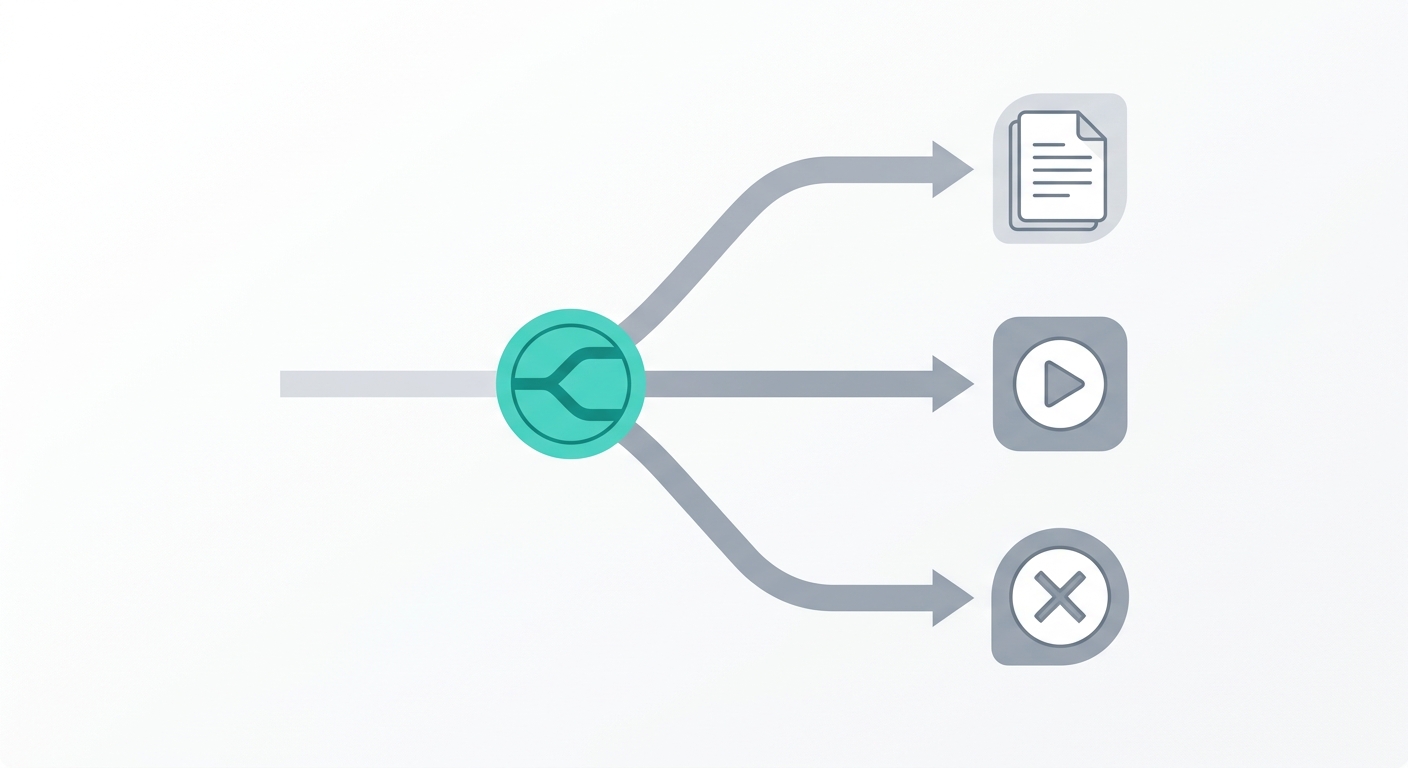
Every video that lands in your queue deserves one of exactly three treatments: read the summary and move on, watch the whole thing, or skip it outright. Most people default to a fourth option that isn’t really an option — leave it in the queue indefinitely, undecided, accumulating guilt. Here’s an actual framework for making that call quickly, instead of letting every video sit in limbo.
The Default Everyone Actually Uses (And Why It’s Bad)
Left undecided, most people apply one blanket rule to everything: either “I’ll watch it eventually” (the queue grows forever) or “I’ll skip anything I don’t get to immediately” (you lose things that were actually worth your time). Neither is a real decision. Both are ways of avoiding the actual three-way call, and the queue either grows without bound or gets pruned indiscriminately. A real framework treats each video individually, on its own merits, fast.
When the Summary Is Enough
The video’s value is informational, not experiential. If what you actually want is the conclusion, the recommendation, or the key facts — a news explainer, a product review, a “here’s what happened” recap — the summary delivers the actual value. Watching the full video adds delivery, not information, and delivery isn’t what you came for.
You’re deciding whether something is relevant to you at all. A lot of videos in a queue aren’t really “watch or don’t” — they’re “is this even about something I care about.” A summary answers that question in under a minute, which is exactly the use case where reading beats watching by a wide margin.
The video is long relative to its actual density. Plenty of videos pad a small amount of content into a much longer runtime. A summary strips the padding and gets you the actual density in a fraction of the time, without losing anything you’d have valued from the padding in the first place.
When You Need the Full Watch
Tone, humor, or delivery is the point. Comedy, a specific creator’s voice, anything where how something is said matters as much as what’s said — this is where a summary structurally can’t deliver the value, because the value isn’t the information, it’s the experience of it.
It’s a tutorial or demonstration you’re actually going to follow along with. Watching someone’s hands, watching a process unfold in real time — a summary can tell you the steps exist. It can’t actually show you them at the pace and detail you need to replicate what you’re watching.
You already know it’s good, from a source you trust specifically for full-length value. Some creators or shows are worth the full watch every time, because you’ve already established that the format itself — not just the information — is why you follow them. Don’t summarize those. Just watch them.
When It’s Actually Fine to Skip
The summary alone confirms it’s not for you. This is the most underused option. A summary that tells you “this isn’t relevant” is doing exactly its job — that’s not a wasted minute, that’s the fastest possible correct decision. Skipping after a summary confirms disinterest is not the same as skipping out of guilt or backlog panic.
It’s a topic you’ve already gotten the update on elsewhere. Redundant coverage of the same story or topic doesn’t need a second full watch, and often doesn’t need a second summary either, once you recognize the pattern.
How to Actually Apply This Fast
The framework only works if the sorting decision itself is fast — if deciding which of the three buckets a video belongs in takes as long as just watching it, the framework has failed. In practice, that means leading with the summary almost every time: read it first, and let the summary itself tell you whether this is a “done, that’s enough,” a “this needs the full watch,” or a “skip, no summary needed.” The summary isn’t just one of the three outcomes. It’s usually also the fastest way to figure out which of the three outcomes applies.
The Bottom Line
A queue full of undecided videos isn’t a discipline problem — it’s a missing framework. Every video actually sorts cleanly into one of three buckets once you ask the right question: is the value informational (read the summary), experiential (watch it), or already answered (skip it). Applying that in under a minute per video is what keeps a queue from turning into either an ever-growing backlog or a guilt-driven mass deletion.